
 xrguo@xinhaimining.net
 +8618733132385
 +8618733132385



A Comprehensive Analysis of Fluorspar Ore Beneficiation Methods
2026-02-12 Xinhai (506)

2026-02-12 Xinhai (506)
If you have any questions, please contact us through the following ways, we will give you more and better assistance!

The genesis and associated minerals of fluorspar deposits vary greatly, leading to significant differences in ore properties. Therefore, during the beneficiation and enrichment process, it is essential to scientifically select appropriate beneficiation methods and process flows tailored to the specific characteristics of each deposit. Currently, mainstream fluorite ore separation processes primarily include hand sorting, magnetic separation, gravity separation, and flotation. Each method possesses unique applicability and advantages.
Hand sorting is the most fundamental mineral processing technique, relying on manual visual identification to separate large, high-grade fluorite ore from waste rock. This method is easy to operate and can reduce initial separation costs to some extent. However, its limitations are significant: it is only suitable for picking out large pieces of rich ore or removing waste rock, has a narrow scope of application, and offers low production efficiency and separation accuracy. Therefore, manual sorting is typically used as an auxiliary method in conjunction with other mineral processing techniques.
Magnetic separation utilizes the differing magnetic properties of minerals in an uneven magnetic field to achieve separation. In fluorspar processing, magnetic separation is rarely used alone but more often as a supporting step for flotation or other processes. It involves using a magnetic separator to remove impurities from concentrates produced in preceding operations, eliminating magnetic gangue minerals to further enhance the purity and specifications of the fluorspar concentrate.
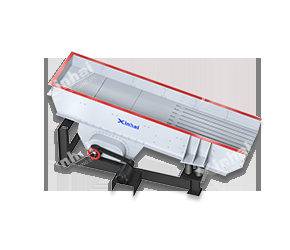
Gravity separation exploits differences in physical properties like specific gravity and particle size between fluorite and gangue minerals, using gravitational forces for separation. In fluorite processing flowsheets, gravity separation typically serves as a pre-treatment step to preliminarily enrich ore, separating heavy minerals from light minerals. This improves feed grade for subsequent processing stages and reduces overall treatment costs. However, when the specific gravity of fluorite is close to that of gangue minerals, the separation efficiency of gravity separation is significantly reduced.
Due to the similar specific gravity between fluorite and most gangue minerals, the application of gravity separation is limited. Additionally, since most fluorite-associated minerals are non-magnetic, magnetic separation is also not an ideal choice. Therefore, flotation has become an indispensable and most critical core process in fluorspar beneficiation. By adjusting the pulp environment and reagent regime to precisely control mineral surface wettability, it achieves efficient separation of fluorspar from associated minerals. This method effectively addresses complex ore properties and is the key to ensuring the grade and recovery rate of fluorspar concentrate.
In actual production, a single beneficiation method often fails to meet the separation demands of complex ores. Typically, based on deposit characteristics, hand sorting, magnetic separation, and gravity separation are employed as pre-treatment or auxiliary steps. With flotation as the core process, a combined flow of “pre-treatment + core separation” is established to achieve efficient recovery and utilization of fluorite resources.


 Consult
 Message
 Email
Email