
 xrguo@xinhaimining.net
 +8618733132385
 +8618733132385



Production Process for Sulphur Concentrate from Coal Gangue
2026-08-06 Xinhai (114)

2026-08-06 Xinhai (114)
If you have any questions, please contact us through the following ways, we will give you more and better assistance!

In response to the characteristics of coal gangue—which consists primarily of coarse and medium-sized particles with a small amount of fine silt—a process has been developed for the separation of coal gangue and the large-scale production of sulphur concentrate. The complete process employs an integrated configuration comprising crushing and screening, particle size classification, gravity separation for rough and concentrate separation, fine flotation, and dewatering and dry discharge. Once the tailings from the separation process meet the required standards, they can be recycled and reused, thereby truly achieving high-efficiency value-added utilisation of mining solid waste and environmentally friendly production.
The entire production line employs a standardised closed-loop process: after uniform feeding from the raw material stockpile, the material undergoes two-stage crushing and multi-layer screening and grading, followed by three-way diversion and sorting based on particle size. The various types of sulphur concentrate are collected, dewatered and stored, whilst tailings from the entire process are consolidated for treatment and dry discharge for resource recovery. Water is recycled and reused throughout the process, ensuring a highly efficient, closed-loop production system that is stable and controllable.
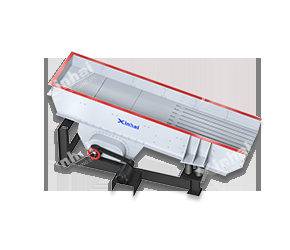
During the crushing and classification stage, raw material feed is stabilised and controlled via a plate feeder. Primary crushing is first carried out by a jaw crusher, reducing large chunks of raw ore to 0–80 mm, followed by secondary crushing using an impact crusher to reduce the material to 0–30 mm, thereby thoroughly separating coal gangue from lumpy and granular pyrite. A three-deck closed-circuit circular vibrating screen is employed for precise classification, separating the material into three categories: 30–5 mm coarse particles, 5–0.1 mm medium particles and -0.1 mm fine slurry. Oversize particles are returned to the fine crusher for recirculation, laying the foundation for accurate classification and separation.
Coarse-grained material is processed using a jigging process. Multiple sawtooth-wave jigs operate in parallel, utilising the density difference between pyrite and coal gangue and the pulsating action of the water flow to separate light and heavy minerals. The coarse sulphur concentrate is then further purified and upgraded using shaking tables, whilst tailings are collected and treated centrally. This process offers the advantages of high throughput, low operational and maintenance costs, and strong adaptability. Medium-sized particles are processed using a combined process of spiral chute pre-selection and 6S shaking table concentration. Through dual separation by gravity and centrifugal force, the grade of the sulphur concentrate can be consistently raised to over 40 per cent.
For fine silt material (-0.1 mm) that is difficult to recover by gravity separation, a specialised flotation process is employed for deep recovery. By conditioning the pulp with specialised reagents such as xanthate, turpentine and lime, and undergoing a full process of roughing, concentrating and scavenging, ultrafine pyrite is efficiently recovered, minimising the loss of sulphur resources to the greatest extent possible.
The sulphur concentrate produced in all process stages is uniformly fed into a thickener for sedimentation, followed by dewatering via a plate-and-frame filter press, ultimately yielding finished sulphur concentrate ready for direct sale. All supernatant from the production process is recycled, achieving zero wastewater discharge. Tailings from the entire process are treated via concentration and filter press dewatering before being discharged in a dry state; once they meet regulatory standards, they can be used for brick-making, as cement additives, or for underground backfilling, thereby completely resolving solid waste pollution issues and achieving comprehensive utilisation of coal gangue resources.


 Consult
 Message
 Email
Email