
 xrguo@xinhaimining.net
 +8618733132385
 +8618733132385


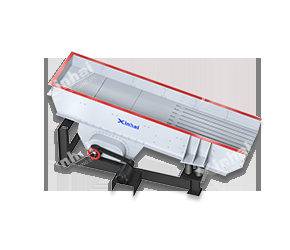

Iron Ore Crushing and Grinding Operations
2026-01-30 Xinhai (768)

2026-01-30 Xinhai (768)
If you have any questions, please contact us through the following ways, we will give you more and better assistance!

Process control for crushing operations primarily employs interlocking control systems. Utilizing advanced, reliable sensors and detection instruments enables the system to automatically monitor critical parameters such as oil pressure and temperature. This allows for the assessment and determination of whether crushing equipment like jaw crushers and cone crushers is operating normally. Crushing process monitoring and control encompass two key points: ① Optimizing crushing loads across stages. For a typical three-stage closed-circuit crushing process, rationally configuring the crushing ratio and production load for primary, secondary, and tertiary crushing achieves safety, energy efficiency, and high productivity. ② Optimizing the crushing-grinding match. This primarily ensures the crushed product achieves optimal particle size distribution, preventing oversized or undersized particles and guaranteeing normal grinding operations in subsequent stages. After primary crushing, the diameter of iron ore particles primarily ranges between 20 cm and 30 cm. Following secondary and tertiary crushing, the ore diameter is reduced to less than 5 cm.
Process control in grinding operations poses a significant challenge for mineral processing automation. The grinding and classification process in mineral processing is highly complex, characterized as a nonlinear process with substantial random parameters. Therefore, achieving superior control outcomes cannot rely solely on single-input, single-output PID control loops. To coordinate the operation of various control loops, a fuzzy controller is often implemented to optimize the control processes of grinding and classification. Grinding serves as the intermediate stage between crushing and separation. Its process parameters and production efficiency directly impact the technical and economic indicators of the final concentrate product, thereby influencing the overall profitability of the mineral processing plant. Achieving superior control requires monitoring numerous parameters, including grinding concentration, mill load, overflow concentration, product fineness, and return sand volume, to optimize performance. After crushing, iron ore is fed into grinding mills for processing. Grinding mills reduce iron ore to a fineness of 0-325 mesh, supporting subsequent mineral processing operations and reducing the difficulty of follow-up work.


 Consult
 Message
 Email
Email