
 xrguo@xinhaimining.net
 +8618733132385
 +8618733132385


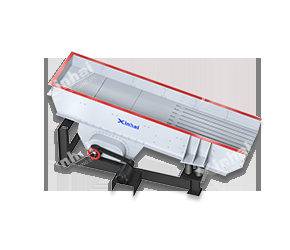

Selection of Quartz Sand Grinding Methods
2026-02-19 Xinhai (453)

2026-02-19 Xinhai (453)
If you have any questions, please contact us through the following ways, we will give you more and better assistance!

In quartz sand purification processes, grinding serves not only as a means of particle size control but also as a critical step for enhancing washing action and promoting impurity liberation. For coarse-grained quartz sand grinding operations, porcelain ball mills and rod mills exhibit distinct technical characteristics and applicable scenarios.
Porcelain ball mills utilize high-alumina balls as grinding media, with their primary advantage being the avoidance of mechanical iron contamination. Under optimized conditions of 65% grinding concentration and time, the target particle size yield can exceed 40%, with concentrate iron content controlled around 160 μg/g. Due to the complete absence of external iron throughout the process, subsequent magnetic separation and flotation can reliably reduce iron content to below 80 μg/g, achieving compliance without acid treatment. The trade-off is lower grinding efficiency, significant over-grinding, and higher fines yield, resulting in reduced target particle size yield.
Rod mills present a starkly different technical profile. Using steel rods as media, the line-contact grinding method significantly enhances grinding efficiency. It achieves over 65% target particle size yield in roughly half the time required by ceramic ball mills, with markedly reduced over-grinding. However, mechanical iron introduced by rod wear substantially elevates concentrate iron content, nearly doubling that of porcelain ball mill products. While this foreign iron can be partially recovered via strong magnetic separation, final acid treatment remains necessary to meet the 80 μg/g limit.
Each approach has distinct advantages and disadvantages: The porcelain ball mill process is clean, controllable, and features a compact workflow, making it suitable for ultra-white sand production sensitive to iron contamination. while rod milling offers high efficiency and large capacity, it necessitates additional acid treatment steps and incurs extra costs for equipment corrosion and waste acid disposal. Further research indicates that narrowing the product particle size distribution to finer grades can reduce iron content in concentrates from both grinding methods to the 50 μg/g level, confirming the universal value of fine grinding in enhancing mineral liberation.
The engineering significance of this comparison lies in recognizing that no single grinding method is universally optimal for quartz sand purification. Instead, a dynamic equilibrium must be sought among raw material properties, product specifications, investment intensity, and environmental constraints. For ultra-white sand production with stringent low-iron requirements, the “slow and meticulous” approach of ceramic ball grinding offers greater technical reliability. Conversely, in scenarios with slightly relaxed iron standards or existing acid treatment capabilities, the “high-efficiency rapid grinding” approach of rod mills demonstrates clear economic advantages.


 Consult
 Message
 Email
Email